The diamond engagement ring guide: symbolism, stone selection, cut, setting and budget.
Written by Déborah Baid, Founder · Mayuri ParisReading 10 min7 chapters
What the maison says
What to remember
The diamond engagement ring is the most symbolically charged piece of jewellery in our culture, and one of the most complex to choose. Shape, metal, stone size, setting: every decision has a concrete impact on the overall look, wearing comfort, and longevity of the ring. This guide covers everything you need to know to make the right choice, without getting lost in unnecessary detail.
For a comprehensive overview of this stone's quality criteria, consult our complete diamond guide before diving into purchasing decisions.
The word "diamond" comes from the Greek adamas, meaning the untameable, the inalterable. This symbolic incorruptibility made it, long before any marketing campaign, the stone most associated with lasting promises.
The first documented diamond engagement ring in history dates to 1477: Archduke Maximilian of Austria presented it to Mary of Burgundy to seal their betrothal. The tradition long remained the preserve of the European aristocracy, before De Beers brought it to a global audience with their "A Diamond is Forever" campaign in 1947, one of the most effective advertising campaigns of the twentieth century.
But beyond its symbolism, the diamond has a practical reason for being the stone of engagement: a hardness of 10 on the Mohs scale, the absolute maximum found in nature. It is the only mineral that nothing can scratch, except another diamond. For a ring worn daily over decades, this is a decisive property.
2. Choosing the Shape: the Impact on How It Looks on the Finger
The shape (or "cut shape" in gemology terminology) is the first visual decision. It determines the overall appearance of the ring and its effect on the hand. Here are the eight principal shapes.
Round brilliant: 58 facets optimised to maximise light dispersion. It is the shape that produces the most brilliance and sparkle. It flatters every finger type and still accounts for approximately 60% of engagement rings sold worldwide. The ultimate reference.
Oval: derived from the round brilliant, the oval visually elongates the finger and gives the impression of a larger stone at equal carat weight. Highly sought after since 2020. Watch for the "bow-tie" effect: a dark arc across the centre of the stone, a sign of poorly proportioned cutting. Always check in natural light before purchasing.
Cushion: rounded edges, a romantic and warm character, soft brilliance. This cut dates back to the eighteenth century and suits milgrain settings or a vintage aesthetic beautifully. It retains more weight in depth, which can make it appear slightly smaller than a round stone at equal carat weight.
Princess: geometric and modern. The square shape results in less material loss during cutting than a round, allowing for a more generous apparent diameter for a given weight. The corners are points of vulnerability: ensure the prongs provide adequate protection.
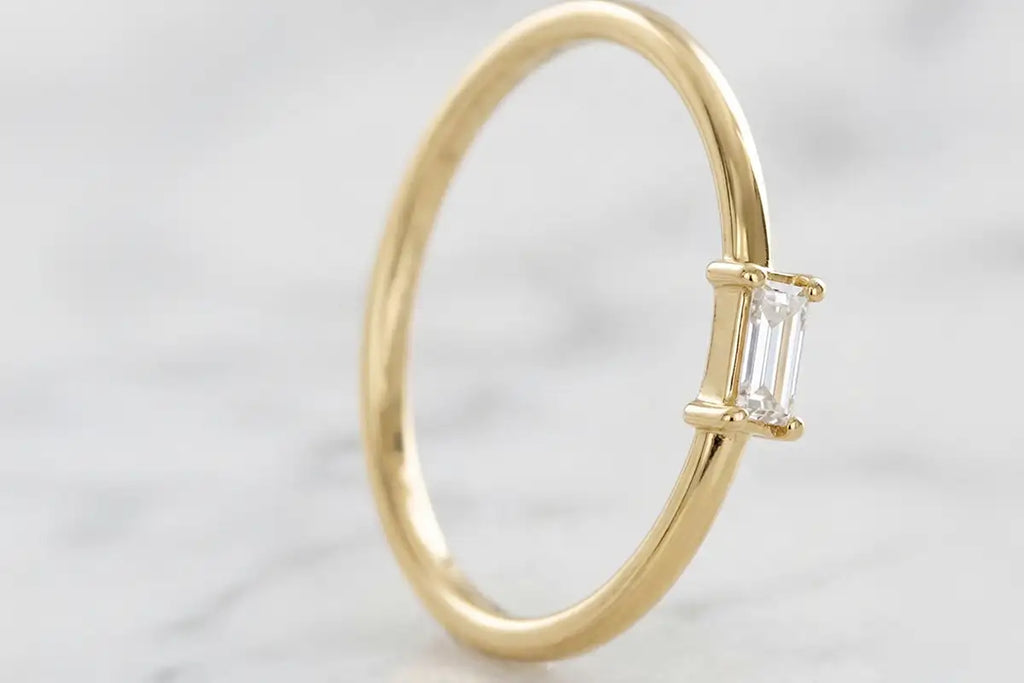
Emerald cut: rectangular with step-cut facets rather than brilliant-cut. Highly refined, it maximises the transparency and depth of the stone. The downside: inclusions are far more visible than with a brilliant cut. A minimum of VS1 is required, ideally VVS. The emerald cut reveals everything.
Pear: with the point oriented upward, it elongates the finger; pointing downward, it creates a striking teardrop effect. Asymmetric and singular, this shape demands careful attention to symmetry at the tip, as even a slightly off-centre point is immediately noticeable.
Marquise: elongated and eccentric, it makes fingers appear more slender. Like the oval, it can display a central bow-tie effect, which should be examined carefully before purchasing.
Heart: a romantic and unmistakable shape, though technically challenging to cut with precision. Symmetry is absolutely essential: a slightly asymmetric heart loses all its elegance.
A practical tip: try several shapes on the hand before deciding. Cubic zirconia models, available at select jewellers, allow you to visualise each shape without any commitment.
The 4Cs (Cut, Color, Clarity, Carat) established by the GIA are the global standard for evaluating diamond quality. For an engagement ring, here is how to prioritise them.
Cut: Excellent, without exception. For an engagement ring, never go below Very Good on the GIA scale, and always aim for Excellent. An Excellent Cut ensures the stone makes the most of every ray of light it receives. It is the one criterion that makes or breaks a diamond's brilliance. A poorly cut D/FL will shine less than an Excellent G/VS1.
Color: G minimum in white gold, H acceptable in yellow or rose gold. The GIA scale runs from D (colourless) to Z (visibly yellow). Beyond grade H in a white gold setting, a slight yellow tint may become perceptible to a trained eye. In yellow gold or rose gold, the setting compensates for the stone's tint: a G or H becomes visually indistinguishable from a D, making it an opportunity to choose accordingly.
Clarity: VS1 minimum as a general rule, VVS for emerald cut or Asscher. Inclusions in a VS1 stone are not visible to the naked eye, making it the practical threshold for an engagement ring. For step-cut shapes such as emerald and Asscher, inclusions are amplified by the large facets; aiming for VVS2 or better in these cases.
Carat: threshold effects matter. A 0.97 ct diamond can cost up to 20% less than a 1.00 ct stone of equal quality, for a diameter difference of 0.1 mm that is imperceptible to the naked eye. The same logic applies to 1.50 ct vs 1.45 ct, and to 2.00 ct vs 1.90 ct. Choosing "just below the threshold" is a smart decision.
4. Choosing the Metal: white gold, yellow gold, rose gold, or Platinum
The metal of the band has a direct impact on the visual appearance of the stone and on maintenance requirements.
18ct White Gold, rhodium-plated: the most classic choice for enhancing the whiteness and brilliance of the diamond. The rhodium-plated surface delivers a crisp, cool shine. One consideration: the rhodium gradually wears away, revealing the slightly warm natural tone of white gold. Re-plating by a jeweller every two to three years restores the original finish, a routine and affordable service.
18ct Yellow Gold: strongly back in favour since 2018 in contemporary collections. A practical advantage: no re-plating required. The warm tone of the band compensates for the colour of a G or H diamond, allowing you to go one grade lower on colour without any visible difference when worn.
18ct Rose Gold: the same advantage as yellow gold in terms of colour perception. A romantic and contemporary look, particularly well received since 2015. No specific surface maintenance required.
Platinum: the hardest metal among the four options. Naturally white in colour, no plating required; it does not yellow over time. More resistant to surface scratches in the long term. Its character: over the years it develops a natural matte patina, distinct from the bright polish of white gold. Some appreciate this quality; others prefer regular re-polishing.
5. The Setting: prong, halo, pave, trilogy, bezel
The setting determines how the stone is held, its day-to-day protection, and its visual effect.
Prong setting (classic solitaire): four or six prongs hold the stone elevated, allowing light to pass through the sides and underneath. The most luminous setting, the most timeless of all. It requires annual inspection of the prongs by a jeweller: a bent prong can cause the stone to fall out.
Halo: a ring of small pave-set diamonds surrounds the centre stone. The optical effect makes the centre stone appear visually larger by approximately 15 to 20%. Hugely popular since 2010. The micro-prongs of the halo tend to accumulate residue: regular cleaning with a soft brush is essential.
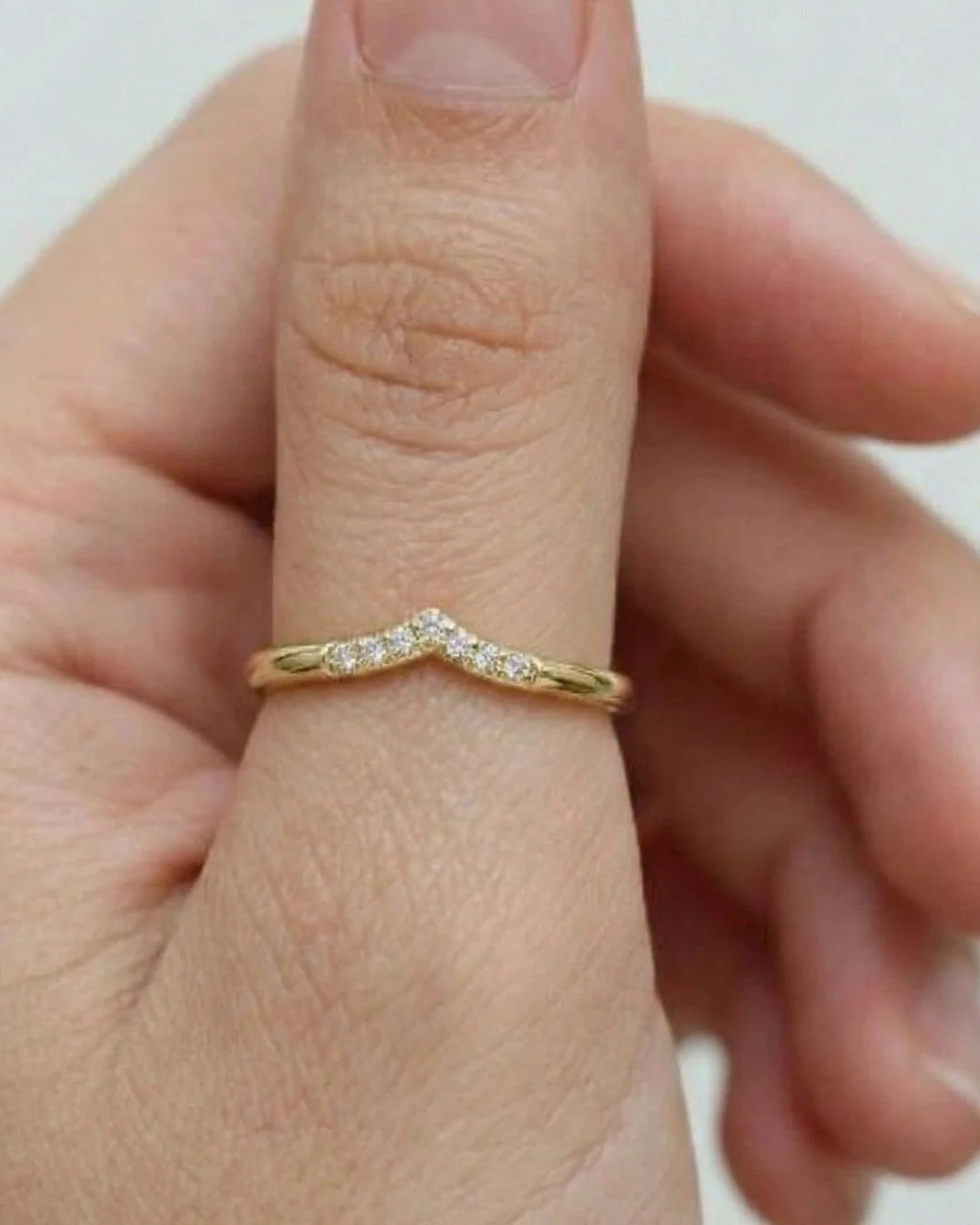
Pavé: small pave-set diamonds cover the shoulders of the band, adding brilliance to the ring without increasing the apparent size of the centre stone. Compatible with every style of centre stone. Take care with very narrow pave bands: the small diamonds can become dislodged with impact.
Three-stone (trilogy): a centre stone flanked by two smaller stones. The symbolism of "past, present, future." The centre stone can be proportionally more modest without sacrificing overall visual impact, as the side stones redistribute the eye's attention across the entire ring.
Bezel setting (closed setting): the stone is encircled by a continuous metal rim. A modern, refined aesthetic with maximum protection of the stone's edges. Perfectly suited to round and oval stones. Less light enters from the sides than with a prong setting; the stone catches the light differently, with a more contained, subtle brilliance.
Engagement ring setting comparison: prong, halo, pavé, trilogy, bezel
6. Bold Alternatives: Black Diamond and Champagne Diamond
For those seeking an engagement ring that stands apart from convention, two alternatives are well worth knowing.
The Black Diamond is an opaque stone, of absolute black, sculptural and striking. Its hardness remains that of diamond: 10/10. The effect against white gold or yellow gold is arresting: a stone that absorbs light rather than diffracts it, creating a bold contrast with the metal. A symbol of love beyond convention, of a confident and distinctive aesthetic. Our Black Diamond guide details the properties, care and settings best suited to this stone.
The champagne diamond (cognac or warm golden in tone) offers a singular, warm and inviting look, particularly well suited to yellow gold and rose gold. Both of these alternatives are generally more accessible than a white diamond of the same size, while retaining the hardness of 10 and the exceptional everyday durability that define the diamond.
7. The Matching Wedding Ring: pairing the two bands
Planning the wedding ring at the time of purchasing the engagement ring is not a constraint. It is a smart decision. Both rings are worn together, often for several decades, and their visual harmony is part of the whole vision.
The same metal, without exception: white gold with white gold, yellow gold with yellow gold, Platinum with Platinum. Different metals create friction between the surfaces and accelerate the wear of both rings unevenly.
Matching width and profile: an engagement ring with a domed profile (rounded cross-section) pairs poorly with a flat, wide wedding ring, leaving a visible gap between the two. Consider the profile of both rings together before ordering, ideally by trying them on in store.
Plain or set wedding ring: if the engagement ring is already detailed (halo, pave shoulders), a smooth wedding ring often makes a stronger impression than one that is equally set. The balance between the two creates a more elegant harmony than an accumulation of diamonds around the entire circumference.
There is no absolute rule. The average in France falls between 0.5 and 1 carat. What matters most is prioritising cut quality (GIA Excellent Cut) over raw weight. A 0.80 ct Excellent cut will outshine a 1.00 ct of inferior cut. Threshold effects also allow you to choose 0.90 ct rather than 1.00 ct for significant savings with no visible difference when worn.
What diamond shape should you choose for an engagement ring?
There is no wrong answer, but each shape has its own specific effect. Round: maximum brilliance, suits everyone. Oval: elongates the finger, very contemporary. Cushion: romantic, vintage in spirit. Emerald cut: a minimalist setting calls for VVS clarity. Our best advice is to try several shapes on the hand before making a decision.
Can you wear your diamond engagement ring every day?
Yes. With a hardness of 10, Diamond does not scratch under normal, everyday conditions. The main precaution concerns the setting, not the stone: remove the ring during sport, gardening, and DIY work to avoid impacts that could bend a prong or dislodge a pave stone.
How do you care for a diamond engagement ring?
A weekly soak in lukewarm water with mild soap and a soft brush (such as a toothbrush) is all it takes to maintain its brilliance. Avoid swimming pools (chlorine attacks gold over time) and harsh household products. Have the prongs checked by a jeweller once a year: a bent prong can lead to the loss of the stone before anyone notices it is too late.
Natural diamond or lab-grown diamond for an engagement?
Both are real diamonds, chemically and physically identical. A laboratory-grown diamond offers greater accessibility at equivalent quality. A natural diamond retains a rarity value on the secondary market that lab-grown stones have not held since 2020, due to the saturation of industrial production. Our dedicated article compares the two in detail across six concrete criteria.