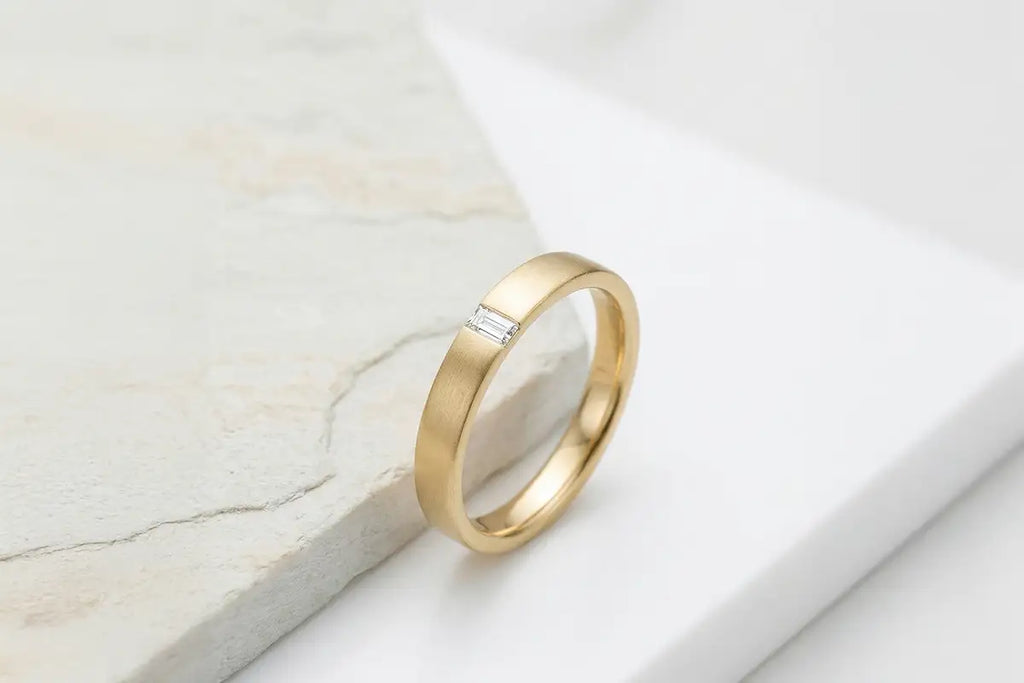
How to care for a diamond jewel: daily cleaning, storage, prong checks and common mistakes to avoid.
Written by Déborah Baid, Founder · Mayuri ParisReading 9 min7 chapters
What the maison says
What to remember
Diamond is the hardest natural substance. This is, rightly, reassuring: your ring will not be scratched by keys rattling around in your bag. But "hard" does not mean "maintenance-free forever." Diamond loses its brilliance faster than most people expect, and certain care mistakes can irreparably damage the setting, or cause the stone itself to be lost.
This guide covers everything: why diamond loses its sparkle, how to clean it step by step, what to avoid at all costs, specific care rules by diamond type, and how to monitor the setting. For everything related to gemological properties, quality criteria, and buying advice, see our diamond guide.
Mayuri 18ct white gold diamond ring on a light background, illustrating the care guide
1. Why Does a Diamond Lose Its Brilliance?
The answer comes down to one word: lipophilic. The term derives from the Greek "lipos" (fat) and "philos" (attracted to). Diamond naturally attracts fatty substances, a physical property of its crystalline structure, not a quality defect.
Everyday sources of grease are numerous and unavoidable: the skin's natural sebum, moisturising creams, makeup, hair products. With every wear, every touch, every application of cream, a microscopic residue builds up on the facets and beneath the stone.
The tangible effect is measurable: this greasy film diffracts and blocks light, which can no longer play freely across the facets. A diamond left uncleaned for a month loses approximately 20 to 30% of its visible brilliance, without the stone itself suffering any damage whatsoever.
The good news is that a few minutes of cleaning is all it takes to restore the original sparkle. The issue is entirely reversible, provided you clean regularly rather than waiting until the dullness becomes visible to the naked eye.
2. Cleaning Your Diamond Jewellery: A Step-by-Step Guide
The most effective method requires no specialist products. Five steps, ten minutes, and your diamond is restored to its original brilliance.
Step 1: Prepare the cleaning bath.
Fill a bowl, not the sink (too great a risk of losing the piece), with hot but not boiling water (boiling water risks thermal shock to certain settings). Add 3 to 5 drops of mild dish soap, free from abrasives and strong fragrances. A standard dish soap works perfectly. Avoid concentrated antibacterial formulas.
Step 2: Soak the piece.
Submerge the jewellery for 5 to 10 minutes. Hot water softens greasy deposits. There is no need to scrub before this step; soaking does half the work.
Step 3: Brush gently.
Use a soft-bristled toothbrush (ideally new, reserved exclusively for this purpose). Brush using gentle circular motions, paying particular attention to the underside of the stone and the prongs, the areas where buildup accumulates most and where the brush has difficulty reaching.
Step 4: Rinse with lukewarm water.
Rinse under lukewarm running water. Never rinse directly over an open, unplugged sink. Use a fine strainer or hold the piece firmly over the rinsing bowl.
Step 5: Dry.
Pat gently with a clean microfibre cloth or allow to air dry on a clean surface. Avoid terry cloth towels, as their looped fibres can catch on the prongs.
Recommended frequency: home cleaning every 2 to 4 weeks depending on how often the piece is worn. Professional cleaning at a jeweller's once a year, combined with a setting inspection.
Cleaning a diamond ring with a soft toothbrush and soapy water
3. What You Should Never Do
What to avoid
Why
Bleach and chlorine-based products
These attack the gold and alloys of the setting, causing irreversible damage within just a few uses. Bleach won't harm the Diamond itself, but it will destroy the ring.
Toothpaste or abrasive powder
These scratch the gold and rhodium plating of the setting. The Diamond can withstand it; the ring cannot.
Swimming pool chlorine
Has the same effect as bleach on gold. Pool water is concentrated enough to attack 18ct gold after just a few swims.
Storing with other jewellery without protection
A Diamond can scratch all other gemstones, and two Diamonds can scratch each other. Always store pieces individually.
Terry cloth towels for cleaning
The looped fibres catch on the prongs and can gradually bend them over time. Use a microfibre cloth exclusively.
Prolonged soaking in cold water
Repeated exposure to water beneath the stone, combined with cycles of expansion and contraction, can gradually loosen the setting.
4. Ultrasonic Cleaners: When They Work, and When to Avoid Them
The ultrasonic cleaner (offered by most jewellers) vibrates liquid at a very high frequency to loosen deposits. Effective for areas the brush cannot reach, it is nonetheless important to know when to use it.
Suitable for: natural white diamonds (code 07 in the Mayuri nomenclature) in secure settings, prong mounts in good condition, well-set pave, and gold free of cracks. These stones withstand ultrasonic cleaning without risk.
Not suitable for Black Diamonds: Black Diamonds, whether natural or irradiation-treated (the vast majority of pieces on the market), feature characteristic micro-inclusions. Ultrasonic vibrations can propagate these micro-fractures and irreversibly damage the stone or its treatment. Ultrasonic cleaning should never be used on a Black Diamond, under any circumstances.
Also not recommended: very fine settings (risk of deformation), older pave work with worn prongs, and pieces with already weakened prongs. When in doubt, always favour manual cleaning. A soft-bristled toothbrush is sufficient in 95% of situations.
5. Black Diamond: Specific Care Rules
The Black Diamond deserves a section of its own, as its care requirements differ from those of the white diamond on two essential points.
Manual cleaning only: warm soapy water and a soft toothbrush. Ultrasonic cleaners should never be used. Steam cleaning should also be avoided. The irradiation treatments used to homogenise the colour of the vast majority of black diamonds on the market can be damaged by these methods.
The good news is that black diamonds are opaque. Greasy deposits are less visible on the surface than they are on a transparent white diamond. A simple, regular wipe with a clean microfibre cloth is all that is needed for daily care.
A monthly water-based clean is nonetheless recommended: even if the build-up is less visible, deposits still accumulate beneath the stone and within the claws. Neglecting this step affects the setting over time, even when the surface of the stone appears clean.
6. The Setting: The Most Important and Most Overlooked Aspect of Care
A perfectly maintained diamond can be lost in a matter of seconds if its claws give way. It is the most common incident in fine jewellery, and the most preventable.
The claws that hold a diamond in its setting are made of metal. And metal bends and wears down with daily impacts, friction against surfaces, and contact with other objects. This is not a manufacturing flaw; it is simply physics.
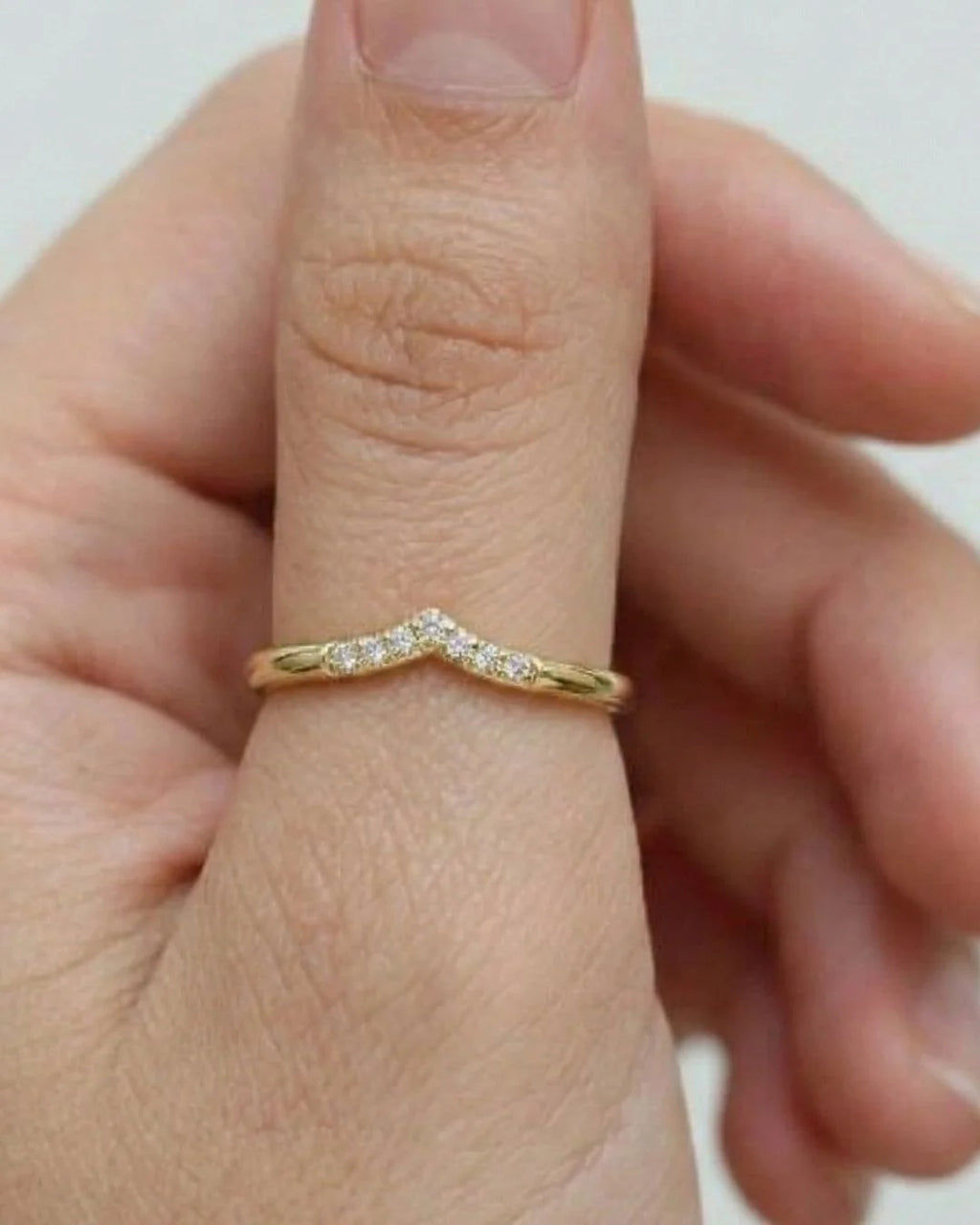
Ultra-macro of the prongs on a diamond solitaire ring, checking the settingSakshi ring pavé-set with diamonds, worn on the finger
Warning signs to watch for:
A claw that catches on fabric (knitwear, tights, the lining of a bag): a sign that it is damaged or lifting
A Diamond that moves slightly in its setting when gently pressed with a finger
A visible gap between the claw and the stone
Recommended check frequency: every 12 to 18 months with a qualified jeweller. A setting check typically costs between £20 and £45. The calculation is straightforward: a £25 check, versus the full replacement cost of a lost Diamond. The choice is clear.
All our pieces can be brought in for inspection and care at our Parisian ateliers or sent by tracked post. Our team checks the claws, rhodium plating where needed, and the overall condition of the setting.
7. Storing and Wearing: Good Habits to Adopt
Storage: store each piece of jewellery separately, in a velvet pouch, a compartmented box, or individual jewellery cases. A diamond can scratch all gemstones and other diamonds. A jewellery box with velvet-lined compartments is the ideal solution. Fabric-lined storage that mixes pieces together creates friction that, while invisible, accumulates over time.
When to remove your ring:
Gardening: soil, impacts, and chemical products
DIY and home repairs: direct impacts on the metal and the stone
Contact sports and weight training: repeated impacts against bars and hard surfaces gradually distort the prongs
Swimming pools and the sea: chlorine (pools) and salt (the sea) attack the gold of the setting over time
What you can do without concern: wearing your diamond engagement ring every day is perfectly acceptable, provided the setting is in good condition and the piece is regularly checked by a jeweller.
Every 2 to 4 weeks for a home cleaning (warm water, washing-up liquid, and a soft brush), depending on how frequently you wear the piece. A professional cleaning at a jeweller is recommended once a year, combined with a prong inspection.
Can You Use Ultrasonic Cleaners on a Black Diamond?
No. Black Diamonds feature characteristic micro-inclusions that can be propagated by ultrasonic vibrations. Jewellery set with Black Diamonds should always be cleaned by hand: warm soapy water and a soft brush. No ultrasonic cleaners, no steam.
How Can You Tell If the Prongs on Your Ring Are in Good Condition?
Two simple tests: (1) run a thread or a light piece of fabric across the prongs; if it catches, a prong is likely lifted or damaged. (2) Gently push the diamond with your fingertip; it should not move within its setting. If in any doubt, consult a jeweller without delay.
Can a Diamond Break?
Diamonds are not scratched easily (diamond is the hardest substance in nature), but they can cleave, fracturing along their natural cleavage planes under a very forceful and precisely directed impact. This risk is minimal in daily life, but it does exist. Avoid direct impacts against an anvil or any hard tool.
Can You Wear Your Diamond Engagement Ring in the Pool?
No, it is not recommended. Pool chlorine attacks the gold of the setting and can deteriorate alloys over time. The stone itself is resistant to chlorine, but the ring will not hold up indefinitely. Always remove your jewellery before swimming in a pool.
What Cloth Should You Use to Clean a Diamond Jewel?
Always use a soft, clean microfibre cloth. Never a terry towel (the looped fibres catch on prongs) or a paper tissue (too abrasive for gold). A microfibre cloth sold with eyeglasses works perfectly.