BirthstonesThe Mayuri Journal15 January 2025
Enriched on 9 March 2026
Birthstones
Diamond: The Birthstone of April
The diamond, April's birthstone, is a symbol of strength, enduring love and truth.
Written by Déborah Baid, Founder · Mayuri ParisReading 4 min11 chapters
What the maison says
What to remember
The diamond is the official birthstone for the month of April and the most iconic gemstone in fine jewellery worldwide. Its name comes from the Greek adamas, meaning "invincible," and it has captivated humanity for over 3,000 years. Composed of pure crystallised carbon formed under extreme pressure and temperature at depths of 150 to 200 kilometres below the Earth's surface, the diamond is the hardest known natural material.
Mayuri diamonds are natural diamonds selected to GVVS quality standards (G colour, VVS clarity), a standard above the typical benchmark in accessible fine jewellery. Each stone is individually sorted. This guide covers everything you need to know: April's birthstone, history and symbolism, the 4Cs, properties, natural versus laboratory-grown, our buying guide and pricing, care advice, and a closer look at the Mayuri collection.
What is the birthstone for April?
The birthstone for April is the diamond. The official association dates back to the list published in 1912 by the American National Association of Jewelers, which became the international reference adopted by Jewelers of America and the American Gem Society.
Before 1912, lists varied: in the Hindu tradition, the diamond was associated with Venus (Shukra); in European medieval lapidaries, it was linked to the sign of Aries and the month of April. The association of the diamond with April symbolises strength, purity, and the renewal of spring, a month of rebirth marked by the world's most enduring gemstone.
History and symbolism of the Diamond
The earliest known diamonds come from India (the Golconda region), where mines were worked from the fourth century BC. The legendary Hope and Koh-i-Noor diamonds originated there. During the Middle Ages, diamonds were reserved for royalty and the clergy. The first faceted diamond cut is believed to date from the fourteenth century, in Bruges or Nuremberg.
In 1477, Archduke Maximilian of Austria presented Mary of Burgundy with the first diamond engagement ring, giving rise to a tradition that endures to this day. In 1947, the agency N. W. Ayer created the slogan "A Diamond is Forever" for De Beers, considered one of the most influential slogans of the twentieth century. This tagline cemented the diamond as a universal symbol of commitment.
Modern symbolism: eternity, purity, invincibility. The diamond is the traditional stone of engagements and of the 60th wedding anniversary.
Gemological properties of the Diamond
The diamond is composed of pure carbon (C) crystallised in the cubic system. It forms at depths of 150 to 200 kilometres and reaches the surface through volcanic pipes known as kimberlites.
Hardness: 10/10 on the Mohs scale, the hardest mineral in nature. A Diamond can only be scratched by another Diamond
A crucial distinction: hardness does not mean toughness. A Diamond resists scratching but can cleave along its crystallographic planes (the 4 octahedral directions). An impact on a corner or edge can cause it to fracture
Exceptional brilliance: refractive index 2.42 (the highest of all transparent gemstones), dispersion 0.044 (the "fire" that splits light into a rainbow spectrum)
Density: 3.52 g/cm³. Exceptionally high thermal conductivity (900–2,320 W/m. K), which is the principle behind thermal Diamond testers
To explore the properties of this gemstone in greater depth, please consult the full profile from the GIA on the Diamond.
The 4Cs of the Diamond: understanding quality
The 4Cs system was created by Richard T. Liddicoat at the GIA in 1953. It is the global grading standard for Diamonds.
Colour (Color): a scale ranging from D (pure colourless) to Z (visible yellow or brown tint). Mayuri selects G-quality Diamonds (near colourless), an optimal balance between beauty and value. The differences between D and G are invisible to the naked eye once the stone is set.
Clarity: a scale ranging from FL (flawless, no inclusions) to I3 (inclusions visible to the naked eye). Mayuri selects VVS (Very Very Slightly Included) Diamonds, with microscopic inclusions that remain invisible even under a 10x loupe to an untrained eye.
Cut: cut quality determines brilliance. The GIA scale for round brilliants reads: Excellent, Very Good, Good, Fair, Poor. A Diamond that is perfect in colour and clarity but poorly cut will appear dull.
Carat: unit of weight; 1 carat = 0.20 grams. The price per carat increases non-linearly: a 1 ct diamond costs significantly more than two 0.50 ct diamonds of the same quality.
Mayuri GVVS Standard: color G (near colorless), clarity VVS. This standard guarantees a visually flawless stone, with no visible tint and no perceptible inclusions, while remaining within an accessible price range for fine jewellery.
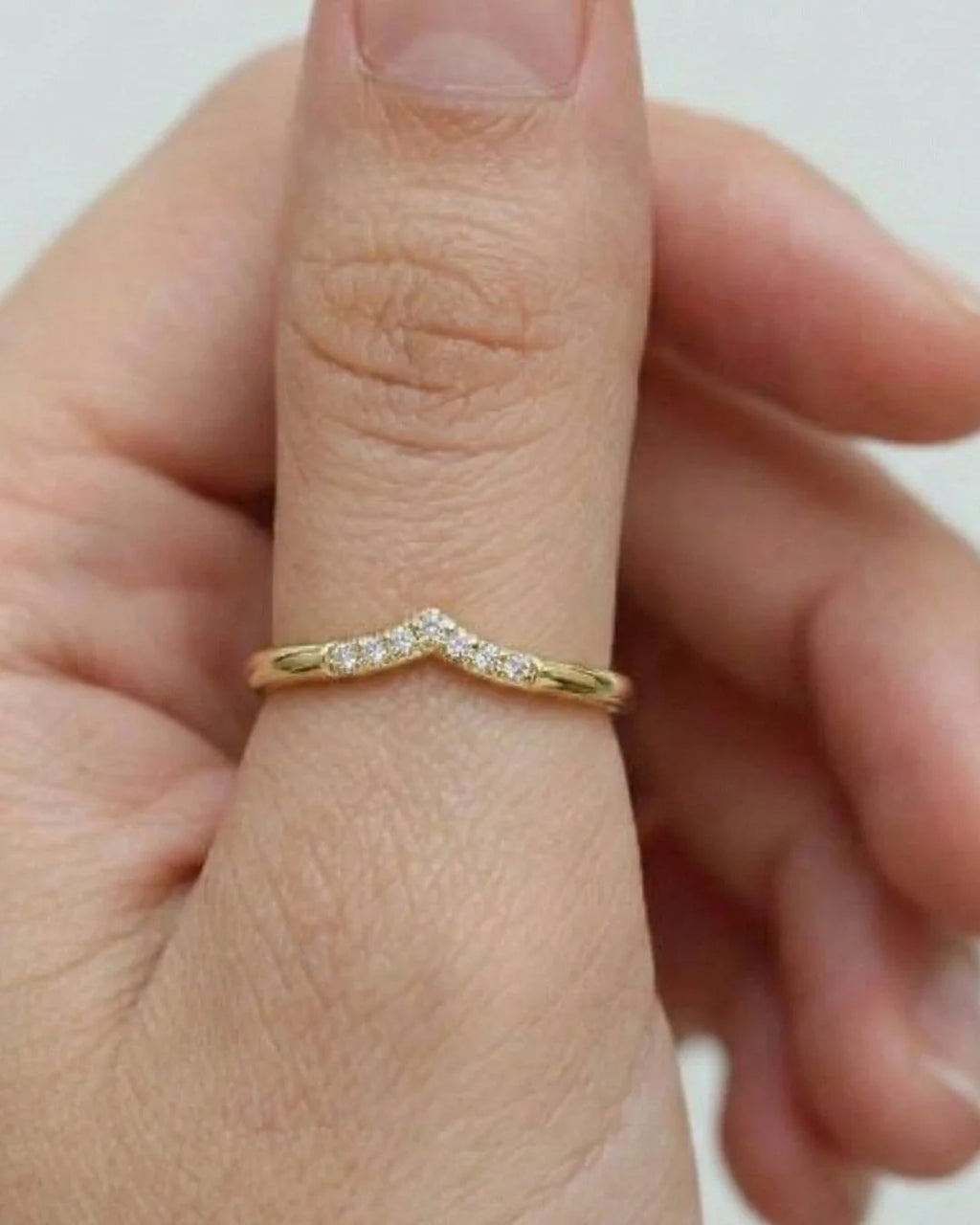
Natural diamond rings in GVVS quality, set in 18ct gold by Mayuri
A laboratory-grown diamond is chemically and optically identical to a natural diamond, sharing the same composition and crystal structure. Two synthesis methods exist: HPHT (high pressure, high temperature) and CVD (chemical vapor deposition).
The difference lies in origin: a natural diamond forms over millions, even billions, of years at 150 km beneath the earth's surface; a laboratory-grown diamond is produced in a matter of weeks. Laboratory-grown diamonds account for approximately 15 to 20% of the diamond jewellery market in 2025. Their prices have decreased by an average of 30% per year in recent years.
The CIBJO requires that laboratory-grown diamonds be designated as "lab-grown" or "synthetic." A jeweller who says "diamond" without qualification is referring to a natural diamond. Only a certified laboratory such as GIA, HRD, or IGI can distinguish a natural diamond from a lab-grown one using specialized equipment.
Mayuri's Position: Mayuri works exclusively with natural diamonds. This choice is guided by lasting value: a natural diamond retains its rarity over time, while laboratory-grown diamonds are produced in unlimited quantities and continue to decline in price. To learn more about natural diamonds, visit the Natural Diamond Council.
Virtues and meaning of the Diamond
In crystal healing, the diamond is associated with the 7th chakra (Sahasrara, the crown chakra). It is said to carry properties of energetic amplification, mental clarity, and purification.
Universal symbolism: invincibility (from the Greek adamas), eternity (as the most enduring of all stones), and purity (through its perfect transparency). The diamond symbolizes unconditional love and lasting commitment. It is the traditional stone of engagement across the world, and marks the 10th and 60th wedding anniversaries.
How to choose a Diamond jewel
Certifications: prioritise a Diamond accompanied by a GIA, HRD (Antwerp, the European reference) or IGI report. GIA is the world's most rigorous standard. For small set diamonds (under 0.30 ct), individual certification is not always standard; what matters is the overall quality of the parcel and the reliability of the supplier.
Budget: set a budget before comparing. In fine jewellery (18ct gold), the price depends on carat weight, quality (the 4Cs) and design. Defining your priorities (stone size versus Diamond quality) helps you make the most informed choice.
Cut shapes: the round brilliant is the most popular cut, offering maximum brilliance. Princess, emerald, cushion, oval and marquise cuts each deliver a distinct look. The cut also affects the perceived size of the stone.
Occasions: Diamond suits every occasion, from everyday wear to life's most exceptional moments. Engagement rings, wedding rings, timeless Earrings, solitaire pendants.
Pairing with gold: white Diamond pairs beautifully with every gold tone. 18ct yellow gold for a classic look, white gold for a modern aesthetic, rose gold for a contemporary touch.
Round brilliant natural Diamond (1 ct, G-H, VS1-VS2): $4,800 to $9,600. The price varies according to cut, fluorescence and the certifying laboratory.
Small GVVS-quality Diamonds (0.10 to 0.30 ct): $240 to $720 per ct. This is the range used in most Mayuri everyday jewellery pieces.
Fancy colour Diamonds: yellow, champagne, black and green Diamonds each follow their own pricing structure. Mayuri's Black Diamonds offer an accessible and distinctive alternative for those born in April.
The price of a fine jewellery piece also depends on the metal (18ct gold, 9ct gold), the complexity of the setting and the design. The price per carat increases exponentially with size: two 0.50 ct Diamonds cost significantly less than a single one diamond of the same quality weighing 1 ct.
Mayuri 18ct gold diamond bracelet with natural GVVS quality diamonds
Diamond cut shapes
Cut Shape
Characteristics
Best For
Round Brilliant
57 facets, maximum fire and brilliance, the most popular cut
Timeless classic, engagement rings
Princess
Square with cross-facet pattern, vivid brilliance
Modern, geometric style
Emerald
Rectangular with cut corners, "hall of mirrors" effect
Art Deco elegance, sophistication
Cushion
Square with rounded corners, romantic fire
Vintage and romantic style
Oval
Elongated shape, visually enlarging effect
Slender fingers, impression of greater size
Marquise
Pointed at both ends, maximises carat weight
Spectacular look, regal style
Caring for your Diamond jewellery
Diamond is the easiest gemstone to care for: its hardness of 10/10 on the Mohs scale makes it virtually scratch-proof in everyday wear.
Cleaning: lukewarm water, mild soap, and a soft brush (an old toothbrush works perfectly). Brush beneath the stone to remove oily residue that dulls the brilliance. Rinse and dry with a microfibre cloth.
The main enemy of diamond is not wear but grease: natural skin oils, creams, and cosmetics build up on the surface and reduce brilliance. A weekly clean is all it takes to preserve the fire of a diamond.
To avoid: direct impact on the edges (risk of cleavage), domestic ultrasonic cleaners (risk to the setting), bleach and chlorinated products (they attack the metal, not the stone).
The Mayuri collection: Diamond jewellery in 18ct gold
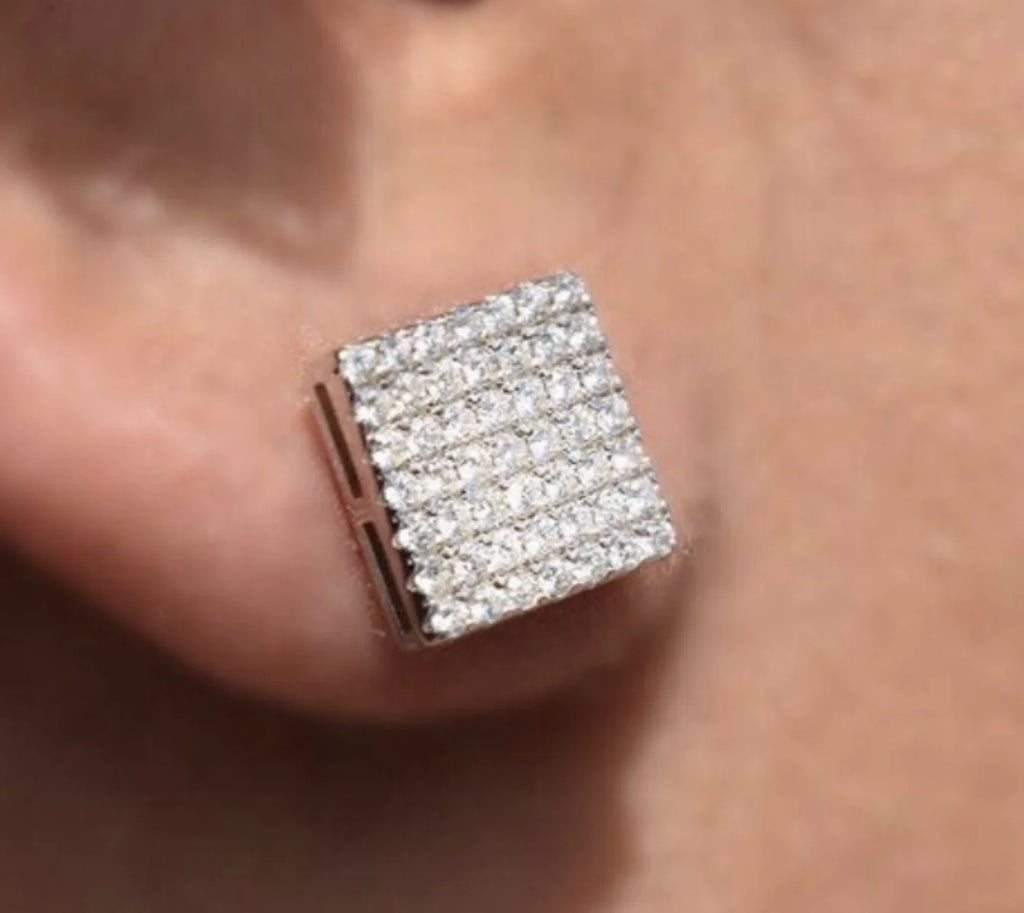
The Mayuri diamond collection brings together jewellery in 18ct gold (yellow, white, and rose) set with natural diamonds of GVVS quality. Available designs include rings (including wedding rings and solitaires), Earrings, necklaces, bracelets, and pendants.
Mayuri's coloured diamonds: Black Diamond (contemporary elegance), champagne diamond (warmth and originality), Green Diamond (deep forest green, exceptional rarity), all original alternatives for those born in April.
Bespoke creations: Mayuri offers the design of unique pieces featuring the diamond of your choice, including solitaires, wedding rings, and personalised engagement rings. Each diamond is selected for its GVVS quality and set by hand by master jewellers.
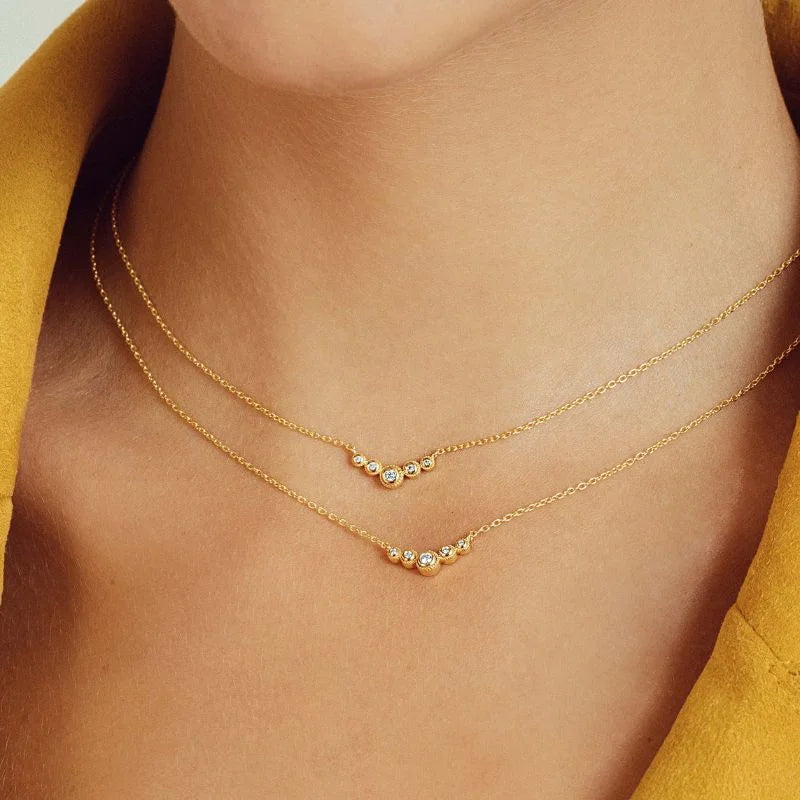
Mayuri 18ct gold diamond necklace featuring a solitaire pendant
The birthstone for April is the diamond. This association dates back to the official list published in 1912 by the American National Association of Jewelers. The diamond symbolises strength, purity, and eternity, a perfect emblem for the month of spring renewal.
What are the 4Cs of the Diamond?
The 4Cs are the four quality criteria for diamonds, established by the GIA in 1953: Colour (scale D to Z, with D being colourless), Clarity (FL to I3), Cut (Excellent to Poor), and Carat (weight, with 1 carat equal to 0.20 g). This is the global standard used by all grading laboratories.
What is the difference between a natural Diamond and a lab-grown Diamond?
A laboratory-grown diamond is chemically identical to a natural diamond. The difference lies in origin: a natural diamond forms over millions of years beneath the earth, while a lab-grown diamond is produced in a matter of weeks (using the HPHT or CVD method). Laboratory diamonds are on average 70–80% less expensive, but their resale value is virtually nil. Only a specialised laboratory can tell them apart.
What is the price of a 1 carat Diamond?
A natural round brilliant-cut diamond of 1 carat, G-H colour, VS1-VS2 clarity, is priced between $4,800 and $9,500 depending on cut quality and certification laboratory. Prices vary significantly according to the 4Cs: a D-IF diamond can exceed $18,000 per carat, while an I-SI2 may fall below $2,400 per carat.
How can you tell if a Diamond is real?
Thermal diamond testers (available in retail) detect the high thermal conductivity of diamond. They can distinguish a diamond from cubic zirconia or glass, but not from moissanite. For absolute certainty, always request a GIA, HRD or IGI laboratory report.
Can a Diamond break?
Yes. Diamond is the hardest mineral (in terms of scratch resistance), but it is not indestructible. It can cleave along its crystallographic planes if struck directly on an edge or corner. This is why emerald-cut diamonds feature trimmed corners to protect their more vulnerable angles.
What are the virtues of diamonds?
In crystal healing, diamond is associated with the 7th chakra (Sahasrara, the crown). It is said to carry properties of energetic amplification, mental clarity and purity.
How do you care for a diamond jewel?
Warm water, gentle soap and a soft-bristled brush, once a week. The main enemy of a diamond's brilliance is grease (skin oils, creams, cosmetics). Brush beneath the stone to remove deposits, rinse thoroughly and dry with a microfibre cloth. Avoid direct impact and products containing chlorine.
Why are Mayuri diamonds GVVS?
G VVS denotes Colour G (near colourless) and Clarity VVS (Very Very Slightly Included). This standard guarantees a diamond that appears visually flawless to the naked eye: no visible tint, no perceptible inclusions. Mayuri has chosen this criterion as the minimum across its entire diamond collection in 18ct yellow gold, a commitment rarely made explicit within accessible fine jewellery.