Gold plating vs vermeil vs solid gold: which should you choose
Gold is everywhere in jewellery. But not all gold is created equal. Between gold-plated pieces starting at $35, vermeil...
Written by Johan Nel, Jewellery designer & goldsmith · trained in gemmology · Mayuri ParisReading 15 min11 chapters
What the maison says
What to remember
Gold is everywhere in jewellery. Yet not all gold is created equal. Between gold-plated pieces at £25, vermeil at £130, and solid 18ct gold at £680, the difference goes far beyond price. It comes down to composition, durability, metal quality, and how you intend to wear the piece. This guide compares all three options to help you make a fully informed choice.
Gold-plated: composition and characteristics
Gold-plated jewellery consists of a base metal (copper, brass, or zinc) coated with a thin layer of gold. The thickness of this layer is regulated: in France, it must be at least 3 microns to carry the "gold-plated" designation (standard NF EN 14437). In practice, the majority of gold-plated pieces on the market have a gold layer thickness of between 0.5 and 1 micron, well below the legal minimum.
This thin layer of gold is applied through electrolysis. The base metal is immersed in an electrolytic bath containing gold ions, which are deposited onto the surface. The process is quick and inexpensive. The result is a piece that mimics the appearance of solid gold, but has neither its composition nor its durability.
Gold-plated jewellery carries no official hallmark in France, as the gold layer is too thin to guarantee jewellery-grade quality. The price reflects this reality: £10 to £45 for a ring or bracelet. It is a suitable choice for fashion jewellery worn on occasional basis. It is worth noting, however, that the gold layer wears away quickly.
Wear becomes visible within 6 to 12 months of daily wear, particularly on areas subject to friction (the inner band of a ring, bracelet clasps). The base metal becomes visible, often taking on a greenish or greyish hue. The piece loses its golden lustre and cannot be restored to its original condition.
Vermeil: the superior standard of gold-plated jewellery
Vermeil is a superior form of gold plating, defined by a strict standard. It consists of a solid 925 Silver base (92.5% pure silver) coated with a layer of gold of at least 5 microns, typically in 18ct gold. This is the minimum required under French standards, representing five to ten times the thickness of standard gold plating.
In France, the only mandatory hallmark for vermeil is the V hallmark. It certifies a 925 Silver base coated with at least 5 microns of gold. The silver base may also bear the Minerva head hallmark, the recognised mark for silver. This is a guarantee of quality endorsed by the French State.
Vermeil offers significantly greater durability than gold plating. With proper care, a vermeil piece can retain its lustre for 2 to 5 years of regular wear. The thicker gold layer provides better resistance to friction and chemical aggressors such as perspiration, perfume, and body lotions.
The solid silver base plays a key role in this durability. Silver does not rust and oxidises very slowly. If the gold layer wears away in places, the underlying metal remains white and noble, unlike the copper in gold-plated pieces, which turns green. The piece can be repolished and re-gilded without any loss of structure.
The price reflects this quality: £45 to £250 for a vermeil ring or pendant, depending on the complexity of the design and the quantity of gold used. It represents a mid-range investment, well suited to everyday pieces you wish to wear regularly, without stretching to the budget of solid gold.
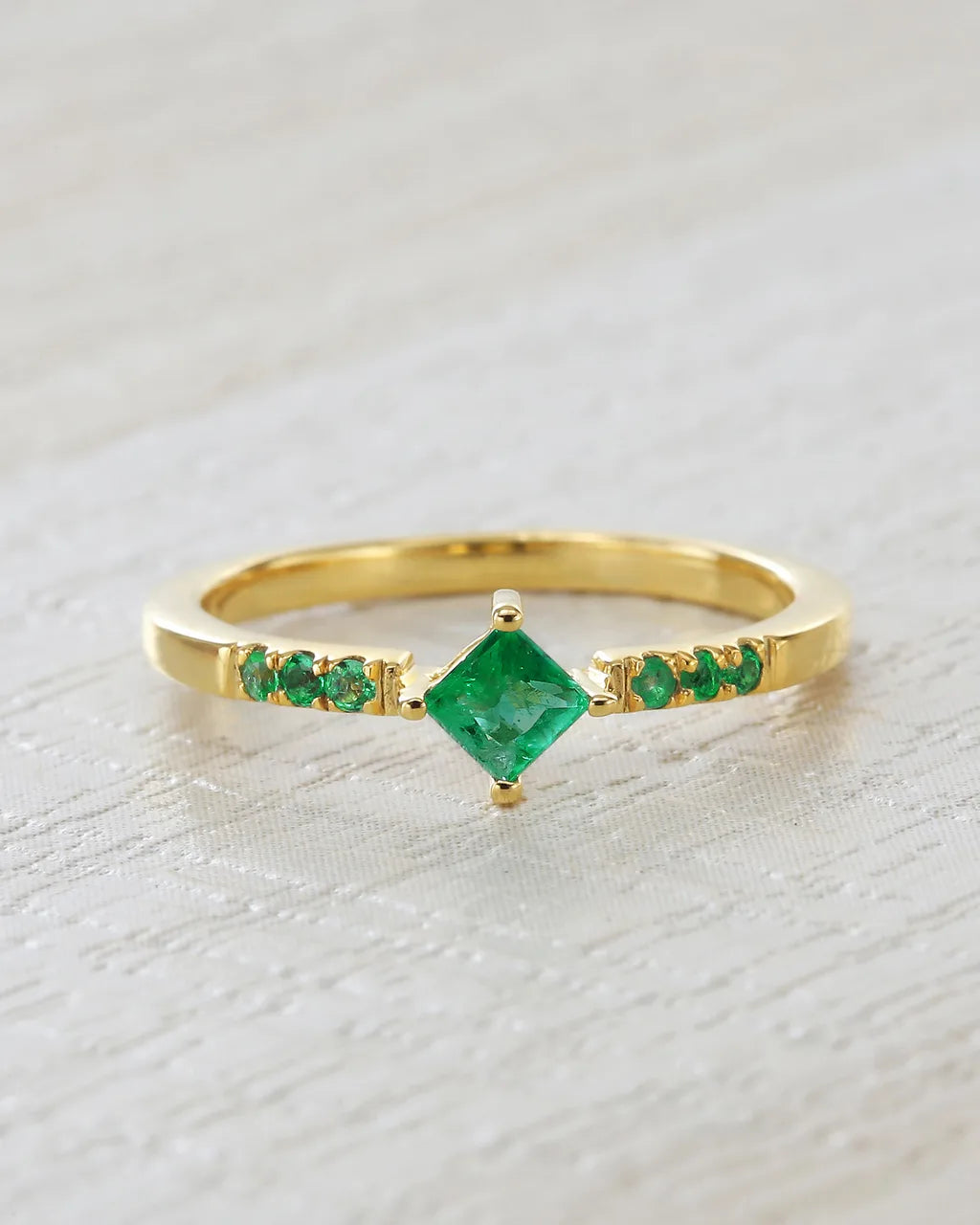
Kali ring in gold vermeil set with natural emeralds on a soft linen background
Solid gold: the noble metal par excellence
Solid gold is an alloy of pure gold and other metals, such as copper, silver, and palladium, which give it its strength. Pure gold (24ct) is too soft for jewellery: its hardness is 2.5 on the Mohs scale, equivalent to that of a human fingernail. It deforms under the slightest impact.
Solid gold is therefore always alloyed. The most common standards in fine jewellery are 18ct (750 parts per thousand), 14ct (585 parts per thousand), and 9ct (375 parts per thousand). The standard expresses the proportion of pure gold within the alloy: 18ct gold contains 75 per cent pure gold, with the remainder composed of alloying metals that reinforce the structure.
Each standard carries an official hallmark in France. For 18ct gold, this is the eagle's head, reserved exclusively for gold, not to be confused with the V hallmark of vermeil or the Minerva head of silver. For 14ct gold, it is the shell. These hallmarks are accompanied by the maker's mark, which identifies the manufacturer or jeweller.
Solid gold is enduring. It does not oxidise, tarnish, or turn green. An 18ct gold piece can be worn every day for decades without losing its brilliance. Surface scratches may appear over time, but they reveal no lesser metal beneath: it is the solid gold itself that remains visible, throughout the entire thickness of the piece.
This exceptional durability accounts for the price: £175 to several thousand pounds for an 18ct solid gold ring, depending on the gold weight, the intricacy of the craftsmanship, and the stones set within it. It is a lifelong investment. Solid gold jewellery can be passed down through generations, resold, or recast. It retains an inherent value tied to the price of gold.
Comparison chart: gold-plated, vermeil, and solid gold
Criteria
Gold-plated
Vermeil
Solid gold
Composition
Base metal (copper, brass) + 0.5–1 micron gold layer
Pure gold alloy (75%, 58% or 37%) + alloying metals
Gold thickness
0.5 to 1 micron (most jewellery on the market)
Minimum 5 microns (French standard)
Solid gold throughout
Base material
Copper, brass, zinc
Solid 925 Silver
Gold alloy (copper, silver, palladium)
Hallmark
No official hallmark
V hallmark (mandatory)
Eagle's head (750), shell (585), clover (375) + maker's mark
Durability
6 to 12 months (daily wear)
2 to 5 years (regular wear)
Lasting (lifelong)
Oxidation
Copper turns green, brass darkens
Silver oxidises slightly (beneath the gold layer)
No oxidation
Price
£10–£45
£45–£250
£170–£1,700+ (depending on weight, stones, and craftsmanship)
Best for
Fashion jewellery, occasional wear
Everyday jewellery, mid-range price point
Heirloom pieces, lifelong wear, investment
Durability and care: the difference that changes everything
The durability of a piece of jewellery depends on its composition and the thickness of the gold layer. A standard gold-plated piece, with a layer of 0.5 microns, begins to show wear after 6 to 12 months of daily wear. Areas subject to friction (the inside of a ring, clasps) lose their gilding first. The underlying copper becomes visible, often with a greenish tint. Once the gold layer is worn through, the piece cannot regain its original brilliance without re-gilding, a costly process relative to the price of the jewellery.
Vermeil offers superior resistance thanks to its gold layer of at least 5 microns (French standard). A well-maintained vermeil piece can retain its brilliance for 2 to 5 years. Care is straightforward: avoid contact with chemicals (perfumes, creams, chlorine), remove the piece before sleeping and exercising, clean with lukewarm soapy water and dry thoroughly. If the gold layer wears down, vermeil can be repolished and re-gilded, as its solid silver base makes this possible.
18ct solid gold is enduring by nature. It does not oxidise, does not tarnish, and does not change colour over time. The only visible changes are superficial micro-scratches, which appear with daily wear. These scratches do not reveal an inferior metal; it is the solid gold itself that remains visible. A simple polish by a jeweller is all it takes to restore the original brilliance, with no significant loss of metal. Maintenance is minimal: a gentle clean with soapy water every two months is sufficient. Solid gold endures through the decades without alteration.
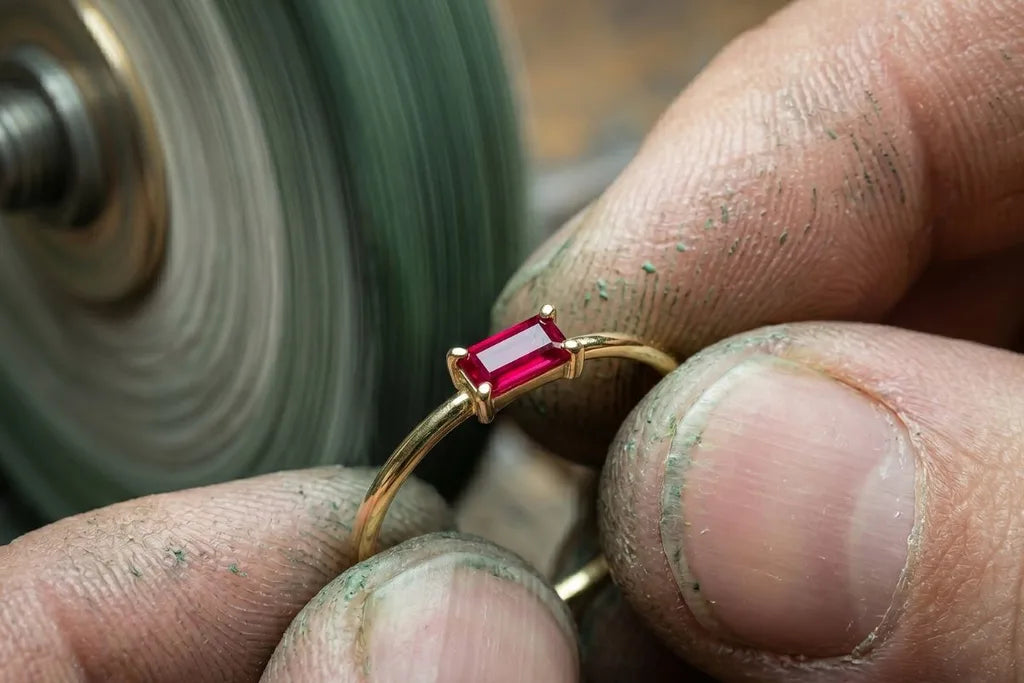
Artisanal polishing of an 18ct yellow gold ring in the Mayuri atelier, professional jewellery care
Price: understanding the cost difference
The price of a piece reflects the quantity of gold it contains, the complexity of the work involved, and its expected longevity. A gold-plated piece costs £10 to £45 because it contains a negligible quantity of gold, less than one gram for a ring. The remainder is copper or brass. The manufacturing process is industrial and rapid.
Vermeil sits within a price range of £45 to £250. The price is explained by the solid 925 Silver base, which is more costly than copper, and by a thicker layer of gold. A vermeil piece contains a greater proportion of precious metals than gold-plated jewellery, and its production adheres to strict standards.
Solid 18ct gold starts at £170 for a simple piece of jewellery (a fine bangle or stud Earrings) and can reach several thousand pounds for a ring set with precious stones. The price depends on the weight of gold (a 3-gram wedding ring in 18ct gold represents approximately £125 of raw metal at current rates), the jeweller's craftsmanship, and any stones used.
The cost per year of wear changes the perspective entirely. A gold-plated piece at £25, worn for 6 months, costs around £4 per month. A vermeil piece at £125, worn for 3 years, costs around £3.50 per month. A solid 18ct gold piece at £680, worn for 20 years, costs around £2.80 per month. Over the long term, solid gold is the most worthwhile investment: it retains its value and can be resold or passed down.
Allergies and skin sensitivity
Nickel is the most common allergen found in jewellery. It causes skin reactions (redness, itching, contact eczema) in approximately 10 to 15 percent of the population. Gold-plated jewellery often contains nickel in its copper or brass base. Once the gold layer wears through, nickel comes into direct contact with the skin. Sensitive individuals may develop reactions after just a few weeks of wear.
Vermeil carries a lower risk, as the base is solid 925 Silver, which contains 92.5 percent silver and 7.5 percent copper. Silver is hypoallergenic. Copper can cause reactions in some individuals, though this is rare. As long as the gold layer remains intact, skin contact is limited to gold, which causes no allergic reaction.
Solid 18ct gold is hypoallergenic. The alloy contains 75 percent pure gold and 25 percent alloying metals (copper, silver, or palladium depending on the colour). Nickel is prohibited in solid gold jewellery intended for prolonged skin contact in Europe (REACH directive). Allergic reactions to 18ct gold are exceptionally rare. For very sensitive skin, solid gold is the only reliable option.
Recognising quality: hallmarks and certifications
Hallmarks are the official guarantee of a piece of jewellery's composition. In France, they are applied by the manufacturer and verified by the State. They make it possible to distinguish a solid gold piece from gold-plated or vermeil.
Gold-plated jewellery carries no mandatory hallmark in France. Some manufacturers add a "plaqué or" or "gold plated" label, but this is not an official hallmark. In the absence of a hallmark, one must rely on the label or the seller's description. Price is often the first indicator: a piece costing £20 cannot be solid gold.
Vermeil carries one mandatory hallmark: the V hallmark, often accompanied by the word "vermeil". It certifies a 925 Silver base coated with at least 5 microns of gold, in accordance with French standards. The silver base may also bear the Minerva head mark. This is a recognised guarantee in France.
Solid gold carries two mandatory hallmarks: the fineness hallmark (indicating the gold content) and the the maker's mark (identifying the manufacturer). For 18ct gold (750 parts per thousand), the hallmark is an eagle's head (the eagle is reserved for gold, not to be confused with the V hallmark of vermeil or the Minerva head of silver). For 14ct gold (585 parts per thousand), it is a shell. For 9ct gold (375 parts per thousand), it is a clover. These hallmarks are cold-stamped into the metal and are very difficult to falsify.
Checking hallmarks is essential when making a purchase, particularly for second-hand pieces or those bought abroad. A piece with no hallmark, or with an illegible one, should raise concern. If in doubt, a jeweller can carry out an acid test to confirm the gold fineness.
Which metal to choose based on your lifestyle?
The choice between gold-plated, vermeil and solid gold depends on three criteria: how often the piece will be worn, budget, and skin sensitivity.
For an occasional fashion piece, gold-plated is sufficient. A decorative bangle worn three times a month will last for several years without showing wear. The lower price point allows for variety without commitment. That said, one must accept that the piece will not be long-lasting and may lose its lustre after a few months of regular wear.
For an everyday piece at a mid-range budget, vermeil is the ideal compromise. It offers the resilience of solid silver with the brilliance of gold, and requires only simple care. A vermeil ring can be worn daily for 3 to 5 years before needing re-gilding. The price remains accessible (£85 to £170 for a simple ring), and the piece can be repaired without losing its value.
For a lifelong or heirloom piece, solid 18ct gold is the only truly lasting choice. It endures through the decades without deterioration, passes from one generation to the next, and retains a lasting value tied to the gold market. The initial price is higher, but the cost per year of wear is the lowest of all. It is the considered investment for a wedding ring, an engagement ring, or any meaningful piece one wishes to keep for a lifetime.
In cases of nickel allergy or sensitive skin, 18ct solid gold is essential. Gold-plated jewellery exposes the skin to nickel as soon as the gold layer wears away. Vermeil is an acceptable alternative while the gold layer remains intact, though the risk increases with wear. Solid gold eliminates this concern entirely.
Mayuri: why we favour solid 18ct gold
At Mayuri, we have chosen 18ct solid gold as our quality standard. This choice reflects our positioning in fine jewellery, where durability and material quality take precedence over entry-level pricing. We do not offer gold-plated pieces in our collection. Our range is composed of 18ct solid gold and vermeil, two noble metals that stand the test of time.
18ct gold (750 thousandths) offers the finest balance between purity and resilience. With 75 per cent pure gold, it retains the warm radiance of gold while gaining the strength required for everyday wear. The remaining 25 per cent of alloy metals (copper, silver, palladium) reinforce the structure without diminishing the nobility of the metal. A piece in 18ct gold can be worn daily, withstands light impact, and will never tarnish.
Our 18ct solid gold collections include our wedding rings, our rings set with precious stones (Emerald, Sapphire, Ruby), and our signature creations. Each piece is accompanied by official hallmarks (the eagle's head and maker's mark) guaranteeing the gold standard. We source our metals from certified refiners, and every piece is individually inspected before delivery.
Vermeil is our choice for fine everyday jewellery. Our vermeil pieces are crafted on a solid 925 Silver base and gold-plated with 18ct gold, in accordance with French standards. The V hallmark certifies compliance with French vermeil regulations. Mayuri vermeil offers a lifespan of three to five years with regular care, at a price ranging from £85 to £250 depending on the design.
We never offer gold-plated jewellery, as it does not meet our standards for durability. A Mayuri piece is designed to last, to be passed down, and to accompany the most important moments in life. Gold-plated jewellery, with its gold layer of less than one micron, cannot honour that promise.
What is the difference between vermeil and gold-plated jewellery? Vermeil is a superior form of gold plating. It consists of solid 925 Silver coated with at least 5 microns of gold (French standard), compared to a copper or brass base with 0.5 to 1 micron of gold for standard gold-plated jewellery. Vermeil carries a mandatory official hallmark (the V hallmark) and lasts two to five years, compared to six to twelve months for gold-plated pieces.
Can gold-plated jewellery be distinguished from vermeil with the naked eye? No, both have the appearance of gold. The difference lies in durability and quality of craftsmanship. Only the hallmarks allow for a definitive distinction: vermeil carries the V hallmark, while gold-plated jewellery bears no official mark.
How long does a vermeil piece last? With regular care (avoiding water and perfume, and removing before sleep), a vermeil piece retains its brilliance for two to five years of daily wear. The lifespan depends on the thickness of the gold layer (a minimum of 5 microns under French standards) and the frequency of wear. Re-gilding can be carried out once the layer has worn through.
Is solid gold worth the initial investment? Yes, over the long term. An 18ct solid gold piece at £680 worn for 20 years works out at approximately £2.85 per month, compared to around £4.25 per month for a gold-plated piece at £25 worn for six months. Solid gold does not wear away, retains its intrinsic value, and can be resold or passed on. It is the most considered investment for a piece of jewellery one intends to keep for life.
Can a worn gold-plated piece be repaired? Technically yes, through electrolytic re-gilding. However, the cost of the process (£25 to £65 depending on the size) often exceeds the original purchase price. Replacing the piece is generally more cost-effective than repairing it. Vermeil and solid gold, by contrast, can be repaired and repolished at a worthwhile cost.
How should an 18ct solid gold piece be cared for? Care is minimal. Clean with warm soapy water and a soft brush every two months, then dry thoroughly. Avoid sharp impacts, though 18ct gold is notably resilient. A professional polish every three to five years will restore its original brilliance. Solid gold does not tarnish and requires no chemical products.
In conclusion
The choice between gold-plated, vermeil, and solid gold comes down to a balance of price, durability, and intended use. Gold-plated jewellery suits occasional fashion pieces, with a lifespan of just a few months. Vermeil offers a middle ground for everyday wear, with a durability of two to five years. 18ct solid gold is the lifelong investment: enduring, timeless, and suited to pieces one wishes to keep forever.
At Mayuri, we favour 18ct solid gold for its jewellery-grade quality and lasting durability. Our solid gold and vermeil collections are designed to endure, to accompany your most meaningful moments, and to be treasured across generations. Choosing a metal is choosing the place that piece of jewellery will hold in your life.